
Saving white abalone is a big task, and it wouldn’t be possible without a big team!
Updated October 28, 2024
White Abalone Restoration Consortium
The White Abalone Restoration Consortium is made up of many partners, all working toward recovering white abalone, the first marine invertebrate listed as endangered in the United States. The Consortium is working together to create sustainable populations of white abalone in the wild, including:
- Locating, observing, and collecting genetic information about white abalone in the wild
- Maintaining captive white abalone parents and producing new juvenile white abalone for outplanting (outplanting = releasing animals into their natural habitat)
- Outplanting captive-bred white abalone into the wild
- Performing research to increase captive production and improve outplanting techniques
- Generating awareness and engagement about white abalone
In March 2011, UC Davis Bodega Marine Laboratory (UCD-BML) became the Endangered Species Act (ESA) permit holder for caring for and breeding white abalone in captivity after years of struggle with production. But just like the saying, “Don’t keep all of your eggs in one basket,” it is unwise to keep all endangered animals in one facility. Partners not only distribute possible risks to the captive population, they also provide experiences and expertise that one facility alone could not accomplish. This work would be impossible without the dedicated work of our partners.
Saving the white abalone is a scientific puzzle
National Oceanic & Atmospheric Administration (NOAA) Fisheries
As the federal agency in charge of managing U.S. endangered species, NOAA Fisheries oversees and is involved in all aspects of the white abalone recovery effort. NOAA Fisheries, with support from many partners, is responsible for developing and implementing recovery plans for the conservation and survival of listed species, including White Abalone, which was listed as endangered in 2001. White abalone are also highlighted through NOAA’s Species in the Spotlight campaign, which helps to drive action for the recovery of marine species at the greatest risk of extinction without human intervention.
NOAA Fisheries outlines four key efforts to conserve white abalone: (1) A captive breeding program, (2) outplanting to establish and enhance wild populations, (3) monitoring the wild population and its habitat use, and (4) public outreach and education. NOAA Fisheries supports these efforts through their own leadership in outreach, research, and outplanting, as well as providing funding and coordination across white abalone conservation partners.
California Department of Fish & Wildlife (CDFW)
CDFW, the state agency in charge of fish and wildlife management, is a key facilitator and leader in white abalone recovery. CDFW supports white abalone recovery by: 1) Coordinating and managing federal recovery grants that support the white abalone captive breeding program; 2) Participating in field efforts to assess wild white abalone populations and outplanting captive-bred abalone to recover the species; and 3) Maintaining healthy captive white abalone populations through research conducted at its Shellfish Health Laboratory, based at UC Davis Bodega Marine Laboratory. Such research includes improving techniques in monitoring health, preventing occurrences of diseases and pests, and researching the cause of shell lesions, which can hinder recovery efforts.
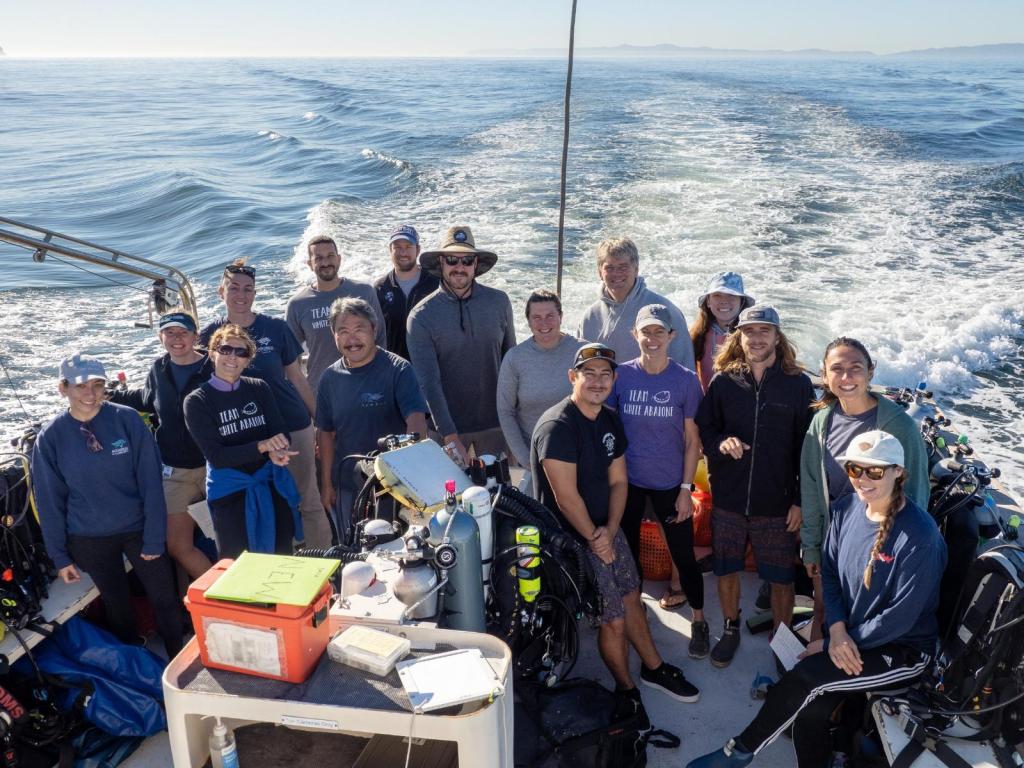
Scientific divers from Aquarium of the Pacific, Paua Marine Research Group, The Bay Foundation, NOAA Fisheries, and the California Department of Fish & Wildlife en route to release white abalone into the wild. Photo by Oriana Poindexter.
White Abalone Captive Breeding Program Partners
The White Abalone Captive Breeding Program is the production part of the White Abalone Restoration Consortium. The Captive Breeding Program includes federal and state agencies, universities, aquariums, non-profits, and commercial aquaculture farms, all committed to producing white abalone for outplanting efforts. Navigate the map below to learn more about the role each of our partners play in the program. Descriptions and photos are also included below the map.
UC Davis Bodega Marine Laboratory
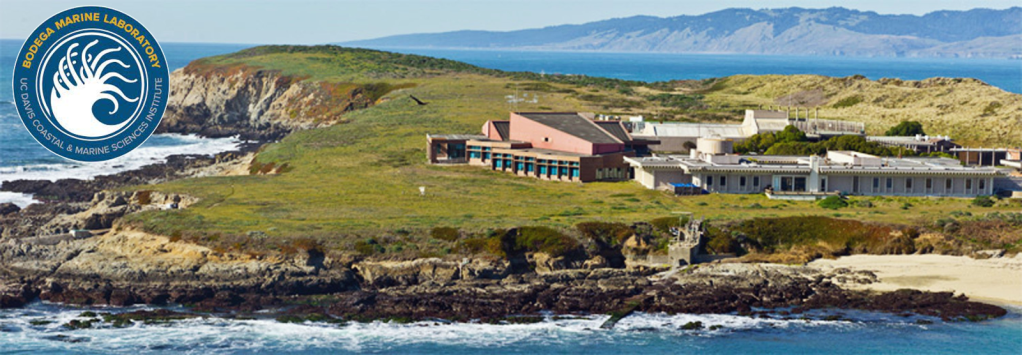
The White Abalone Captive Breeding Program at UC Davis Bodega Marine Laboratory (BML) in Bodega Bay, CA has led the captive breeding program since 2011, holding the ESA permit for captive white abalone and coordinating captive production among partner facilities. They conduct research on improving captive production and outplanting success, including understanding the effects of disease and climate change on captive and wild populations and learning more about the physiology of abalone reproduction. BML maintains a large collection of wild- and captive-origin white abalone, ensuring that they remain healthy and productive to support successful spawning and outplanting efforts.
BML also houses California Department of Fish and Wildlife’s Shellfish Health Laboratory, which is leads efforts to prevent and treat disease in captive and wild white abalone.

Moss Landing Marine Labs
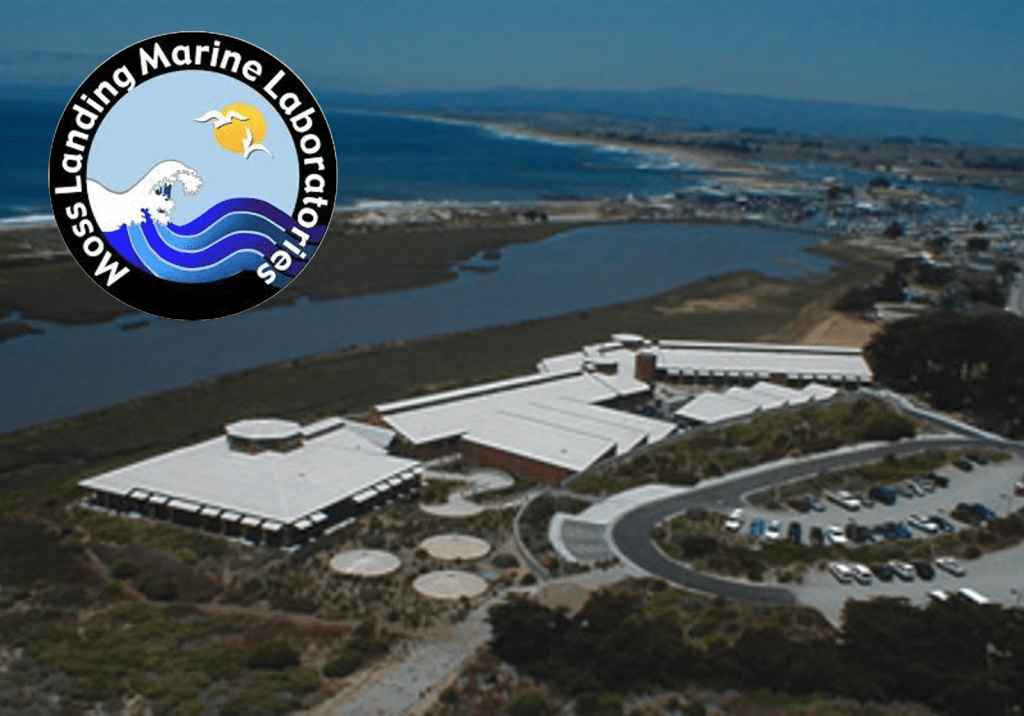
San Jose State University Moss Landing Marine Laboratories (MLML) in Moss Landing, CA conducts research to improve captive production and outplanting success, including the effects of probiotics on disease and reproduction. MLML also supports captive breeding by accepting larvae produced during spawning attempts and grows them up into juveniles ready for outplanting.
Read about their Feb 2021 abalone transfer from MLML to SCMI in prep for outplanting.
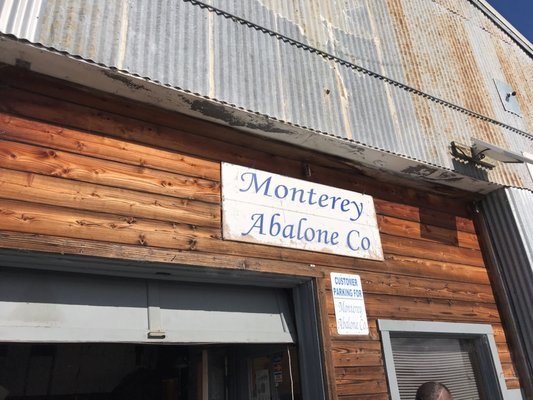
Monterey Abalone Company
Monterey Abalone Company helps provide giant kelp (Macrocystis pyrifera) to white abalone held at UC Davis Bodega Marine Laboratory when kelp is sparse in Bodega Bay. They are instrumental in our ability to feed our thousands of animals during lean times!
The Cultured Abalone Farm
The Cultured Abalone Farm may specialize in red abalone aquaculture, but they also provide critical support for white abalone recovery through maintaining and growing up populations of white abalone and sharing their best practices with other white abalone growers.
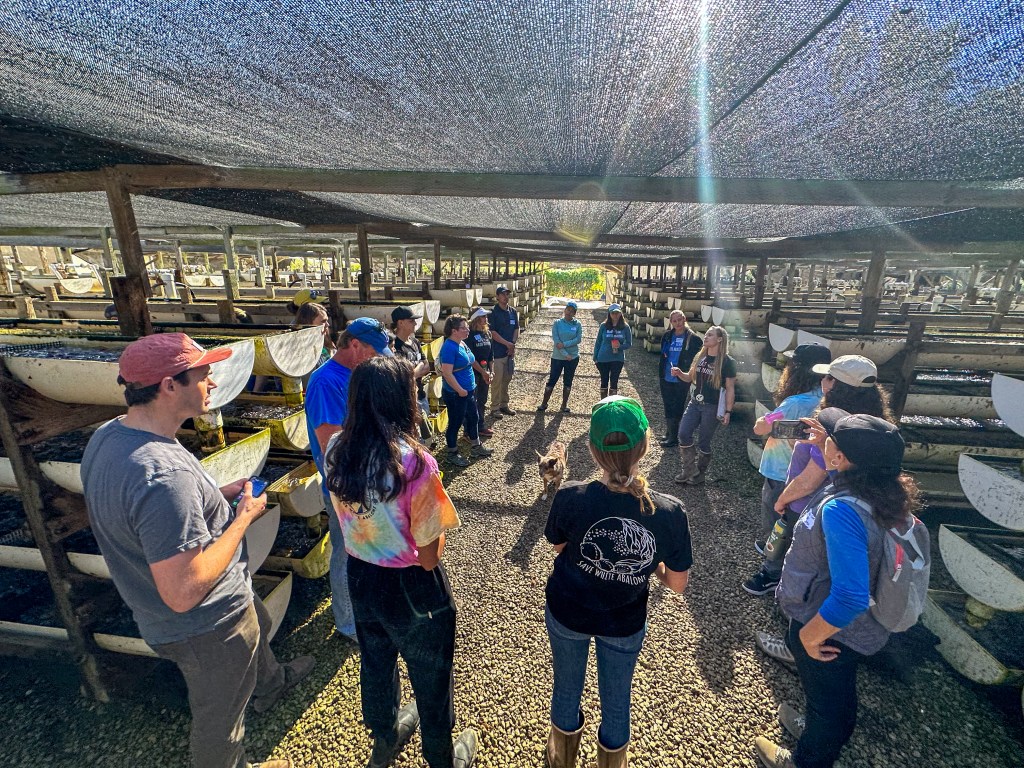
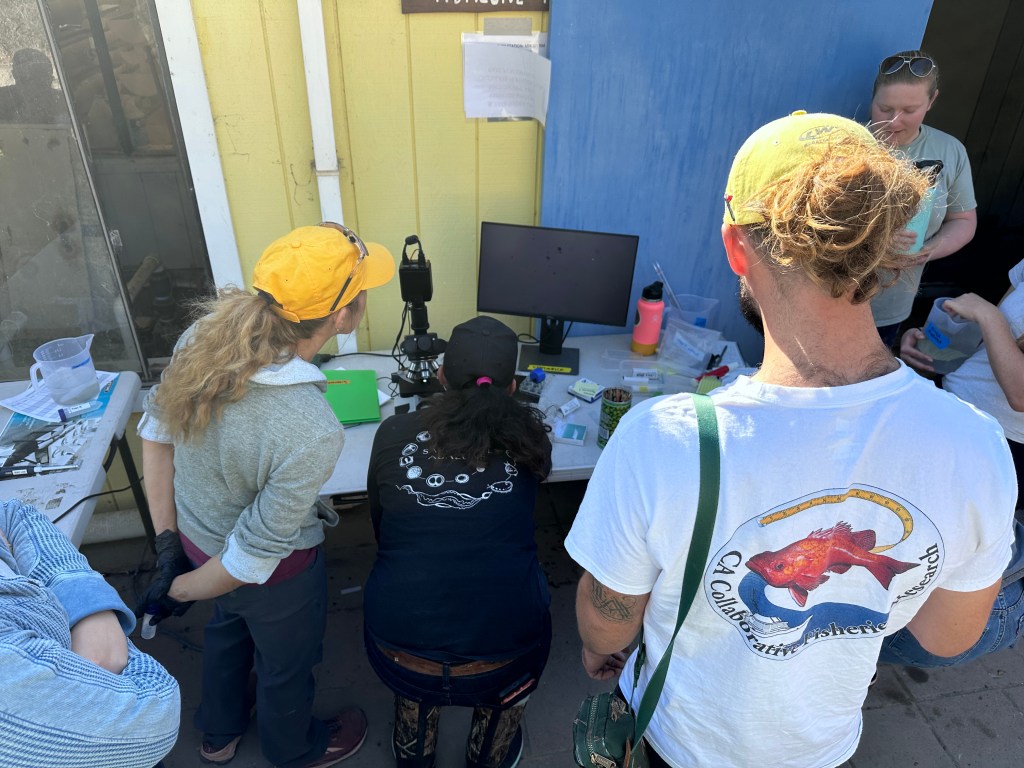
The Cultured Abalone Farm hosted the first ever white abalone spawning and culture workshop for all program partners in 2023. Read more about the workshop here.
UC Santa Barbara Marine Science Institute
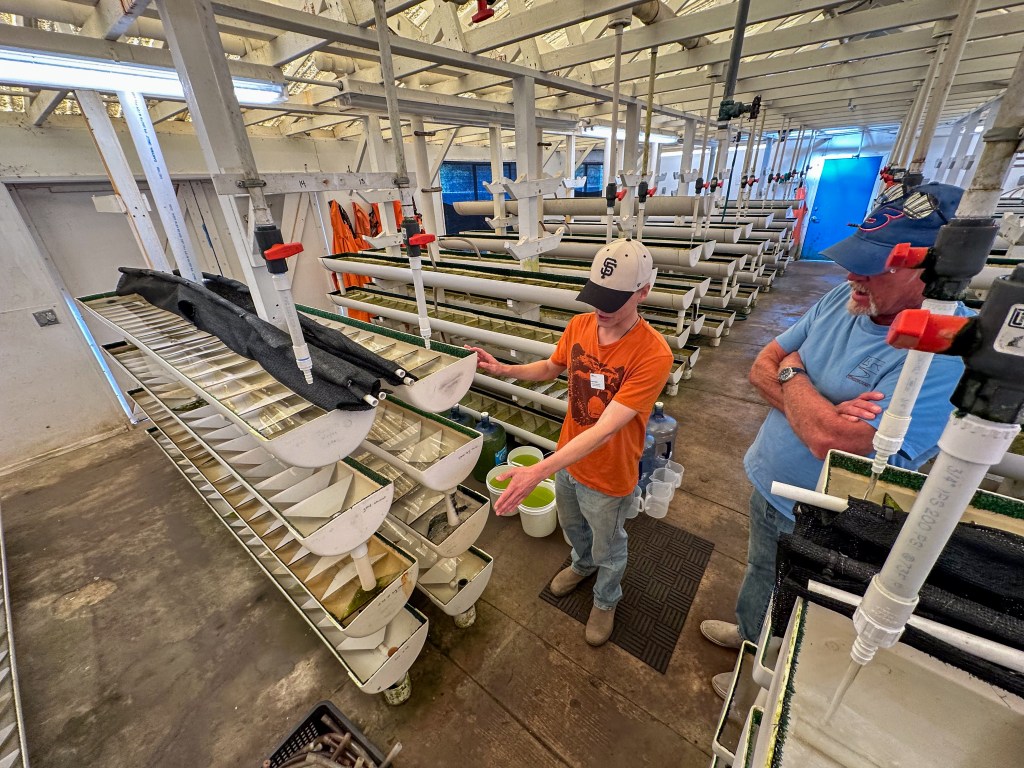
Many of the tools that are used for abalone aquaculture were first developed at the University of California, Santa Barbara (UCSB), and they have been a perennial part of white abalone restoration efforts. White abalone captive breeding at the UCSB Marine Science Institute has been a decades long effort , including research, rearing, spawning, outplanting, education, and outreach.
UCSB is the home of significant milestones for white abalone captive breeding. The first white abalone captive breeding attempt that was part of the recovery program occurred there. A spawning event at UCSB in 2001, conducted in collaboration with the Channel Islands Marine Research Institute, created over 100,000 juveniles. A successful spawn at UCSB in 2012 again jumpstarted the captive breeding program after a decade of challenges with disease.
Santa Barbara Museum of Natural History – Sea Center
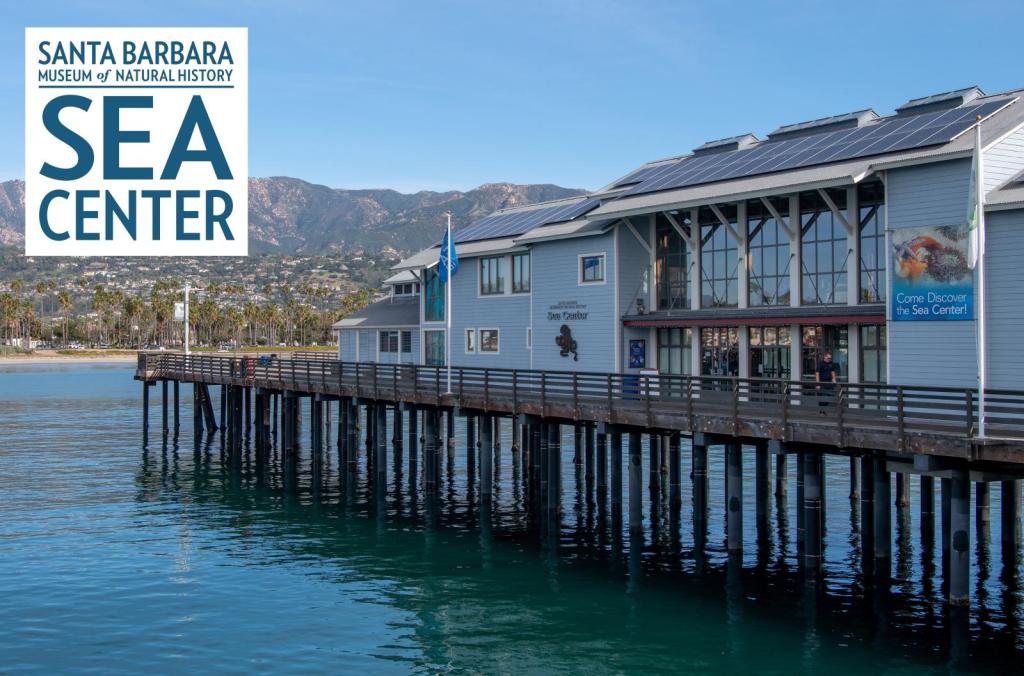
The Sea Center at the Santa Barbara Museum of Natural History has been hosting mature white abalone for over a decade, supporting and participating in spawning and outplanting, including growing out progeny and providing individuals for outplanting. In 2019, they opened a Saving White Abalone Exhibit , highlighting its conservation work to bring white abalone back from the brink of extinction.
California Science Center
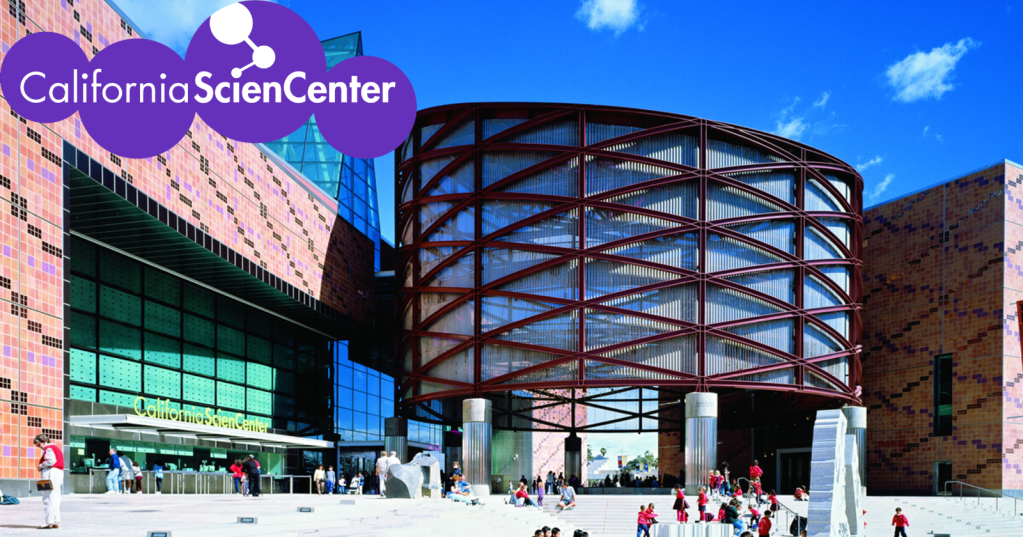
California Science Center helps maintain adult white abalone, which they use for education and outreach through public display. Watch as an aquarist hand feeds their white abalone !
Aquarium of the Pacific
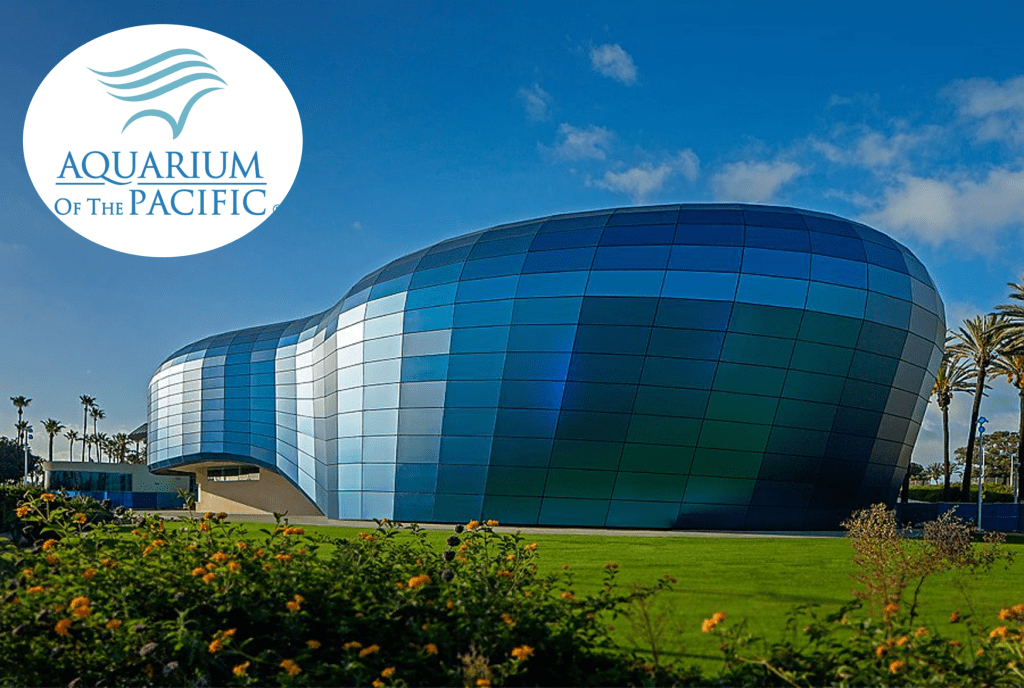
Aquarium of the Pacific (AOP) in Long Beach, CA has been working with NOAA Fisheries and UCD-BML for over a decade on this project. Not only do they support white abalone recovery through public display and education and outreach, but also through research, spawning, growing out of progeny, and providing white abalone for outplanting.
The Bay Foundation
The Bay Foundation has been working on abalone restoration for decades. Their holding facilities at the Southern California Marine Sciences Institute in Terminal Island, CA are a hub for much of the outpalnting activity that has occurred since 2019.
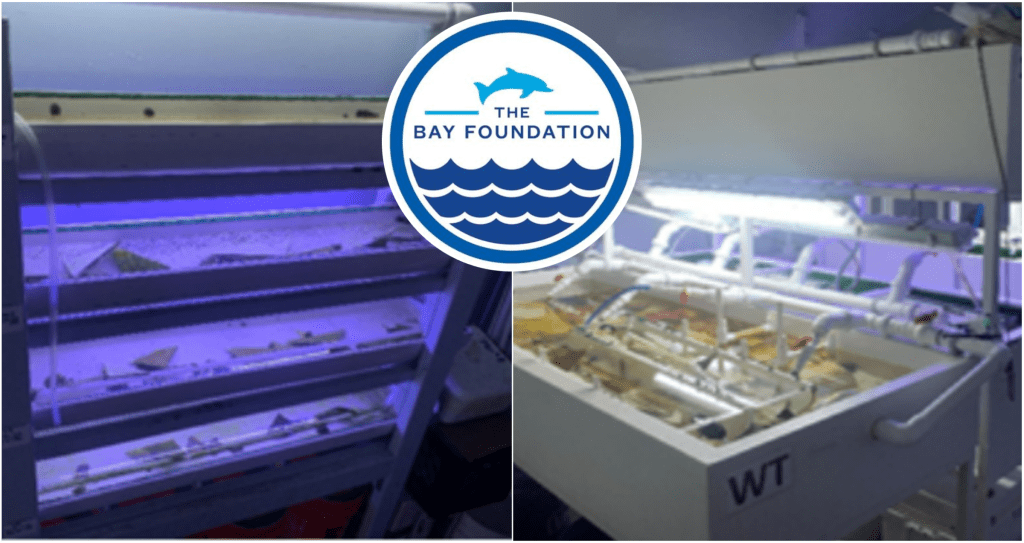
Dr. Kristin Aquilino deemed The Bay Foundation the “Grand Central Station” of the White Abalone Recovery Program for the constant shuffling through of white abalone from grow out facilities to outplanting sites, receiving thousands of white abalone progeny and preparing them for outplanting.
Cabrillo Marine Aquarium
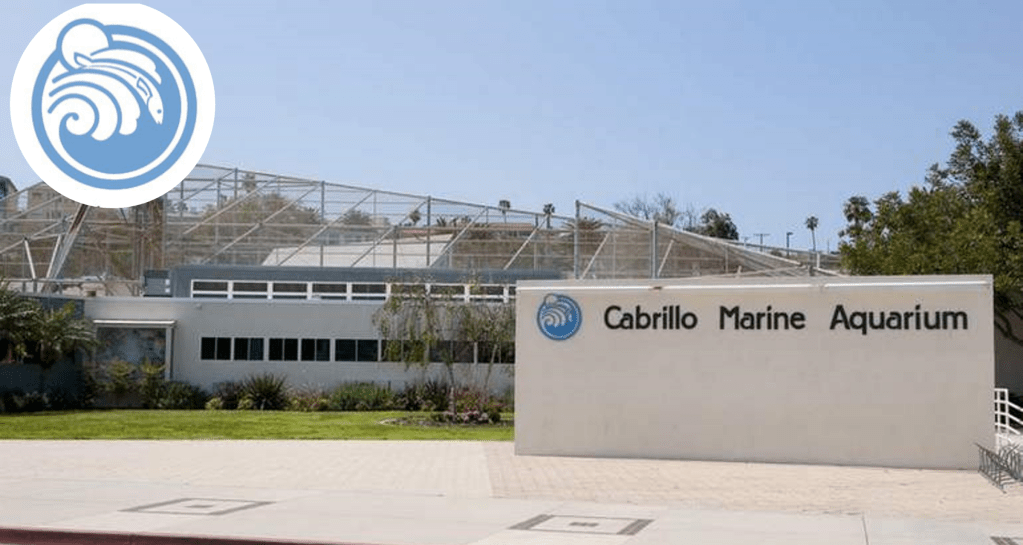
Cabrillo Marine Aquarium, in San Pedro, CA, supports white abalone recovery through public display, education and outreach, as well as growing white abalone progeny. They have provided white abalone for outplanting and participated in several successful spawning attempts.
University of California, Irvine
Scientists at UC Irvine (Professor Donovan German and PhD Candidate Newton Hood) conduct research on white abalone physiology and reproduction, helping improve spawning and culturing methods and increase the number of animals produced for outplanting.
NOAA’s Southwest Fisheries Science Center
NOAA Fisheries oversees and is involved in all aspects of the white abalone recovery effort, including research on improving captive production and outplanting success and preparation of animals for outplanting. The Southwest Fisheries Science Center in La Jolla, CA conducts a range of research related to white abalone, including research on white abalone genetics, physiology, and spawning and settling.
Scripps Institution of Oceanography
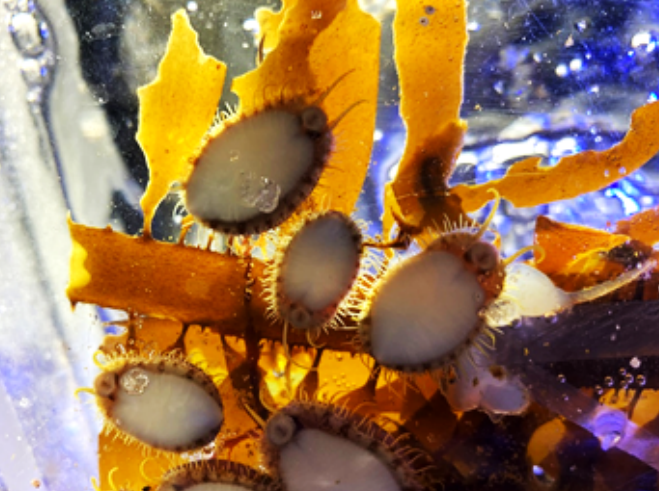
Researchers at UC San Diego’s Scripps Institution of Oceanography are investigating how white abalone’s gut microbiome is influenced by infection with the bacterium that causes Withering Syndrome.

Paua Marine Research Group
The Paua Marine Research Group aids white abalone recovery through: 1) identification of appropriate rocky reef habitat in southern California that may support abalone populations, 2) outplanting (release into the wild) of captive-raised juvenile and adult abalone, and 3) behavioral analysis of wild and captive-reared outplanted abalone through underwater time-lapse photography.
Centro de Investigación Científica y de Educación Superior de Ensenada
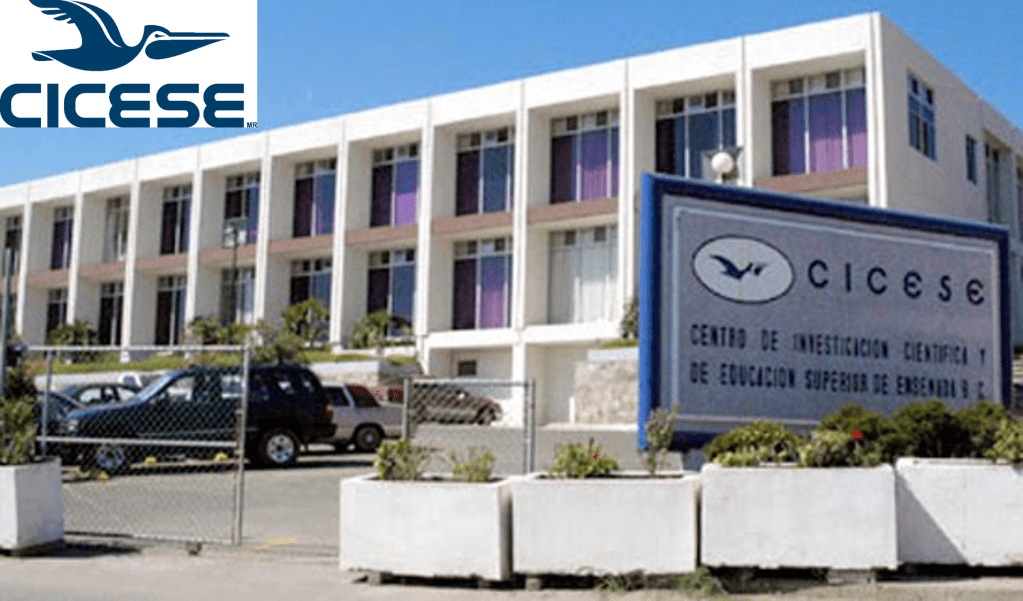
The Centro de Investigación Científica y de Educación Superior de Ensenada (CICESE) in Baja California, Mexico supports white abalone recovery and captive breeding by growing up progeny and conducting research on improving captive reproduction success.
University of Washington
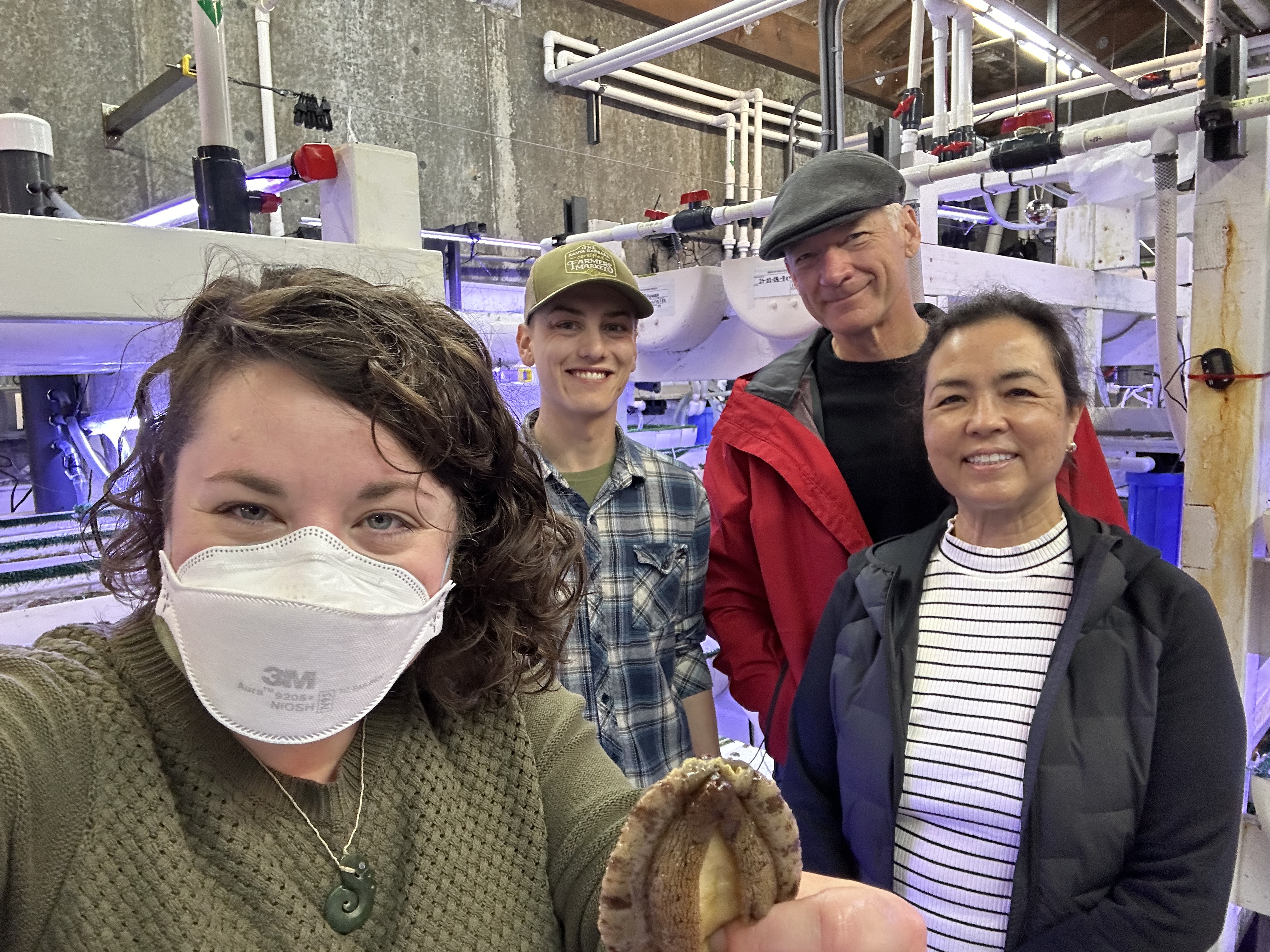
Dr. Carolyn Friedman at the University of Washington in Seattle, WA researches strategies to reduce white abalone susceptibility to Withering Syndrome and the role of climate change in abalone disease. Research in the Friedman Lab has been instrumental in advancing our knowledge of Withering Syndrome.
LightHawk
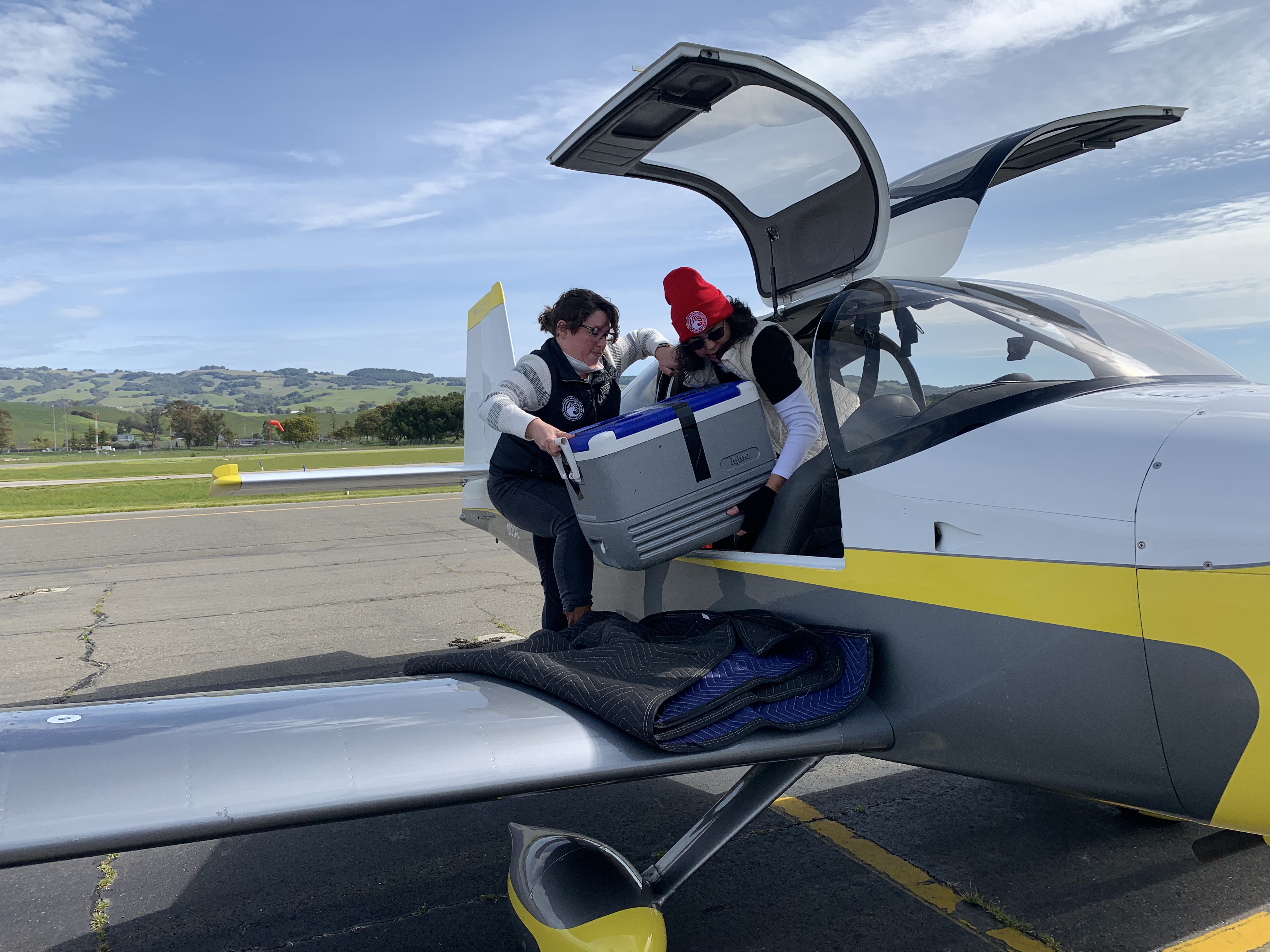
LightHawk Conservation Flying co-designs flight campaigns to achieve relevant conservation outcomes, educational objectives and outreach strategies. They have flown millions of abalone embryos and hundreds of thousands of post-settlement white abalone from UC Davis Bodega Marine Laboratory to partners for grow out. The availability of LightHawk flights has significantly accelerated the speed at which we can recover this iconic marine snail. We’ve even had a pilot help out during a spawning attempt!


California Sea Grant
California Sea Grant supports white abalone research and engagement. As a leader in supporting abalone aquaculture research for decades, they have supported the development of many of the aquaculture techniques used today. California Sea Grant has been funding abalone research since the 1970’s. California Sea Grant funded research is focused on investigating the role of hormones and reproduction, and how they might interact with disease, such as the pathogen that causes withering syndrome, diet, and temperature. Understanding how disease affects white abalone reproduction is critical not only for captive rearing, but also for understanding the population dynamics and reproductive potential of outplanted animals as well as informing optimal outplanting locations, and therefore the successful recovery of white abalone.
California Sea Grant also supports continued efforts to connect everyone working towards white abalone recovery, including growers, aquariums, universities and other research facilities, restoration groups, and state and federal agencies to optimize captive breeding and abalone aquaculture. Funds also support outreach and communication efforts, strengthening existing partnerships, and building new partnerships, including with Sea Grant fellows and extension specialists and public outreach with schools, stakeholders, journalists and more.
 White Abalone Captive Breeding Program